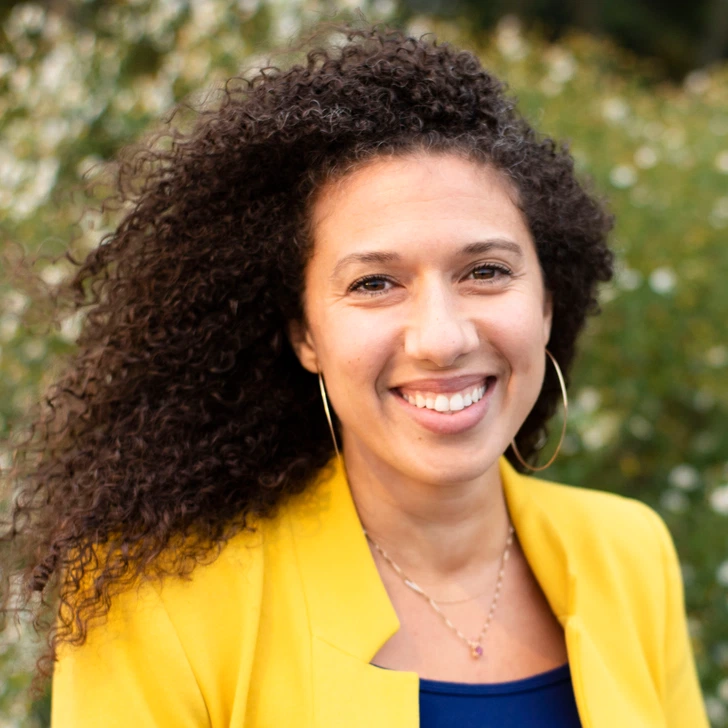
Aria Florant
Co-Founder & CEO
Liberation Ventures

At the most basic level, “reparations” are the process of the state making amends for harm. While most people think of reparations simply as compensation, a wider variety of material, systemic, and symbolic repair for victims, their families, and broader society are involved.
As defined by the United Nations, reparations refers to measures by the government to repair violations of human rights by providing a range of material and symbolic benefits to victims or their families as well as affected communities and society as a whole.
The Repair Framework is how Liberation Ventures defines comprehensive reparations. It applies the UN reparations definition to the human rights violations of chattel slavery and its legacies in the United States – including racial violence, Jim Crow, redlining and segregation, inequitable veterans benefits, the war on drugs, and more. Comprehensively addressing these harms requires reckoning, acknowledgement, accountability, and redress.
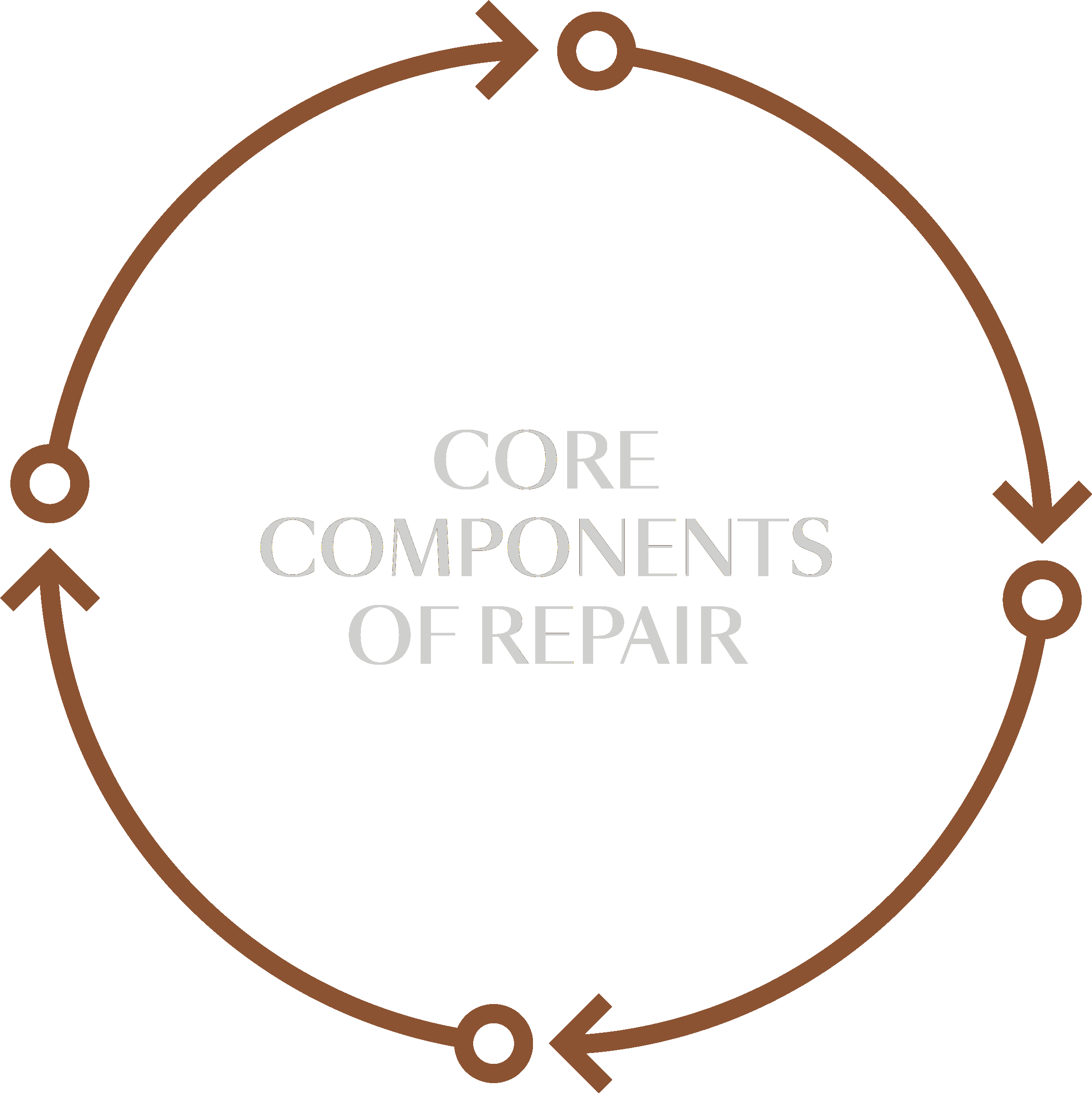
Understanding or grappling with the what, who, how, and why of actions that have contributed to harm
Public admission that harm has been done
Ownership and commitment to take action, cease and repair harm
Acts of restitution, financial compensation, and rehabilitation, proactive steps taken to embed racial justice into systems and “heal the wound”
What is a culture of repair? Culture is a society’s way of life. It is the prevailing beliefs, values and norms of a group of people, and it infuses all aspects of our lives. It shapes and is shaped by dominant narratives – the ideas and themes conveyed by a collection of stories. And it is expressed in the laws, customs, and day-to-day behavior of people as they interact with one another; in what we believe it is important to teach children; in the values our authority figures role model; in the stories we tell about our society; and more.
A culture of repair is a culture where any time harm is caused, individuals and institutions have the skill and will to repair it.
Having a culture of repair means that individuals know how and are expected to repair harm – using the repair cycle of reckoning, acknowledgement, accountability and redress. Kids learn how to repair as they come of age, just like they learn math and reading. Everyone is motivated to repair harm, because it is a cultural norm. It is socially unacceptable not to.
Having a culture of repair means public and private institutions are held to the same standard: they have the capacity and reinforcement mechanisms to repair harm whenever it is caused. Our cultural, legal, and political systems promote follow through on this expectation. Practicing repair is an obvious, necessary contributor to building trust with consumers, constituents, and beneficiaries – making repair a requirement for any institution to survive.
“You do what you know is right.”
Growing up, this was my dad’s constant refrain. He would say, “If you hurt someone, you apologize. If you make a mistake, you learn, so as not to repeat it.” Given the very white town in Colorado where I grew up, he was teaching me how to operate as effectively as possible in a system that was not built for me. Yet the lesson I took from it was broader: for all of us, repair is required for belonging – and therefore, survival.
In the years since, I have traversed worlds: Black and white, grassroots and institutional, ethnic studies and finance. Holding multitudes of these worlds illuminates the tensions and contradictions between them. When I explain the history of white supremacy in the feminist movement to my white mother, her blind spots remind me how hard it is for humans to face shame. I benefit from light skin in a world where proximity to whiteness confers power, and I must be disciplined about how to use and share that power. And yet I still inhabit this world as a Black woman, fighting for my humanity, painfully aware of the cycles of harm that generational trauma inflicts – cycles I am trying to break in myself, my family, and my work.
Over and over, life seems to put the same difficult choice in front of me: narrow my vantage point and choose a tribe, or allow myself to be expansive, complex, and whole. The former is easier, but it’s a trick; true belonging means belonging to myself, in all of my multitudes. And this is not just my story: this is the story of so many people who feel pressure to shut off sides of themselves to stay safe. People who feel forced to hide who they love, worship in secret, fit themselves into binaries, shut down emotions, disconnect from where they come from; every day, so many of us have to struggle to be whole.
So too does America.
To date, we have chosen to let the ideology of racial hierarchy fracture us. We have made gains, but efforts to roll back critical protections like voting rights and affirmative action are erasing the progress we have made. Policies that prohibit students from learning the history of chattel slavery and its legacy, and the magnitude of contributions Black Americans have made to this country since its founding, are limiting our ability to learn from the past to create a just future. America is shutting off sides of herself – shoving her history under the rug – out of shame. And if we cannot face the shame of our origin, we definitely cannot repair it.
It is time to walk a harder path. The promise of America has yet to be realized, and all of us must work to get us there. This is why Liberation Ventures is building A Culture of Repair – to build a true, just, multiracial democracy and society. Repair is required to stop the cycles of harm we continue to witness across time and place, and especially in our streets. A Culture of Repair is the only way to heal, and deliver the prosperity that all of us deserve.
At Liberation Ventures, we have nostalgia for a time that has not yet been. We imagine an America where all people are motivated to repair harm whenever it is caused, and where our norms, systems, rituals and values reinforce this. We imagine a society committed to the safety of Black people, and all people – and where our economic and democratic systems can be trusted to uphold this. We know that repair has the potential to transform us, both individually and collectively, and accelerate us toward the other side of reparations – a joyful, bright, safe, and loving place where everyone wants to be.
America is at a crossroads.
January 6, 2021 was a powerful symbol of the choice in front of us: allow white supremacy to continue to reign, on full display through the Capitol riots; or finally build a just multiracial democracy, the potential for which was illuminated in Georgia that same day. We are a nation trying to become whole, and in the wake of a pandemic and uprising that both shined a piercing spotlight on systemic oppression of Black communities, we have a window of opportunity. We must face our shame and repair the harm of our origin in order to become a country where everyone belongs. As my father taught me, our survival as a nation depends on it.
Join us. Download A Dream in Our Name, LV’s inaugural report outlining our vision for a Culture of Repair.
With hope and gratitude,
Aria Florant
Co-Founder & CEO
Liberation Ventures